When to Winterize Your Sprinkler System in Memphis, and What It Costs
Quick answer: If you’re wondering when to winterize your sprinkler system in the Memphis area, schedule it before the first hard freeze. The first frost and the first hard freeze land on different dates every year, and a cold front can bring them early, so don’t wait for a freeze warning. Winterizing means using compressed air to push all the water out of your pipes, valves, and sprinkler heads so nothing freezes, expands, and cracks over winter. A standard residential blowout with Automatic Rain is $140.
Ready to book? Schedule sprinkler winterization in Memphis or call (901) 521-9112.
If you run an in‑ground sprinkler system in Memphis, Germantown, Collierville, or anywhere in Shelby County, there’s one fall chore you can’t skip: getting the water out before it freezes.
Water expands about 9% when it turns to ice, and that’s more than enough to split a pipe, crack a valve, or blow the seals out of a backflow preventer, the most expensive part of your system. Here’s when to do it, what the work includes, what it costs, and why a quick DIY drain usually isn’t enough here.
Why Memphis winters threaten your system
People underestimate Memphis winters because they’re short, but they absolutely freeze. The first frost (36°F) and the first hard freeze (32°F) land on different dates every year, and a single cold front can bring them earlier than you expect.
Any water left in the system when temperatures drop into the 20s is at risk:
- Pipes: buried shallow, they can still freeze on a hard cold snap and crack.
- Valves and manifolds: trapped water splits valve bodies and ruins solenoids.
- Sprinkler heads: water in the riser freezes and cracks the head.
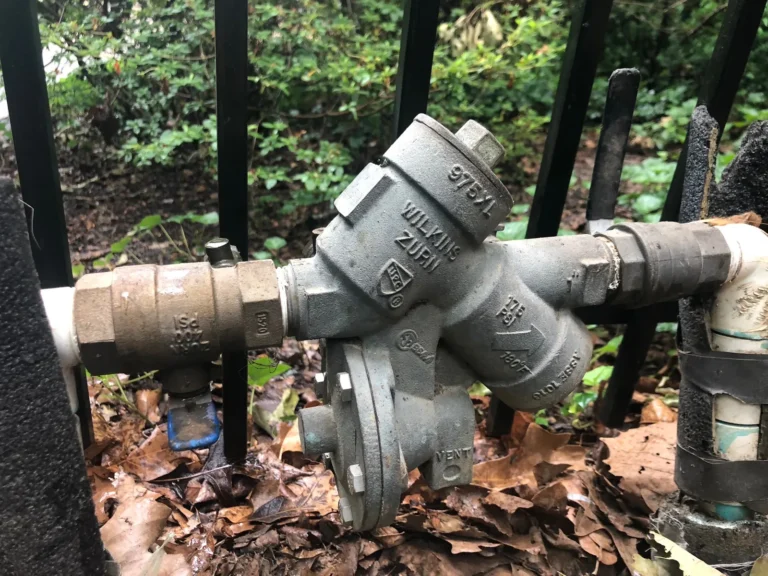
- The backflow preventer: above ground and the most vulnerable; a frozen backflow assembly is a costly repair and a compliance problem.
A blowout removes the water, so there’s nothing left to freeze.
When to winterize in Memphis
The rule: have it done before the first hard freeze, not after. The date changes every year, so book ahead instead of waiting for a freeze warning. A few reasons not to wait for the “last minute”:
- The first hard freeze doesn’t come on the same date every year. You can follow the National Weather Service Memphis forecast, but a cold front can bring a freeze sooner than expected.
- Irrigation companies book solid in the first cold week of the season. The homeowners who wait are the ones scrambling after a pipe already cracked.
- Your lawn doesn’t need irrigation once it goes dormant and the rain picks up, so there’s no downside to winterizing early.
If you’re reading this and it’s already cold, call now. A same‑week blowout beats a burst pipe.
What winterization includes
Winterization, often called a sprinkler blowout, connects an air compressor to your irrigation system and uses low‑pressure air to push the water out through the sprinkler heads, one zone at a time. The crew also drains and protects the backflow preventer and sets the controller for winter. Shutting off the water is not enough on its own, because gravity won’t clear the low spots, the heads, or the backflow assembly.
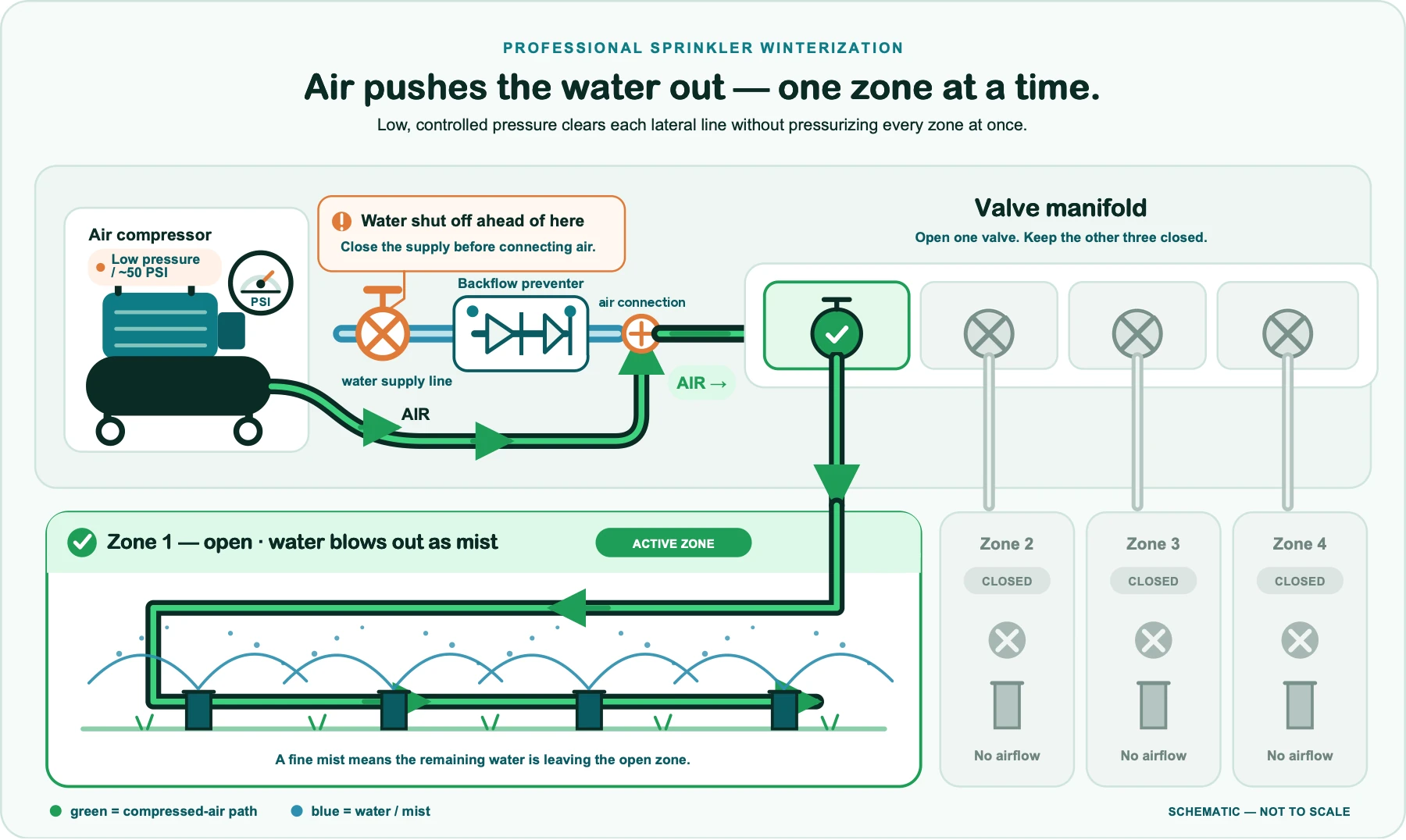
See how sprinkler winterization works, step by step.
Blowout vs. draining it yourself
Some homeowners try to skip the blowout by opening the drain valves or the boiler‑drain on the backflow. In a colder climate that’s rarely enough, and in Memphis it’s a gamble:
- Gravity draining misses the low spots. Any dip in the pipe run holds water, and that’s exactly where a freeze cracks the line.
- Heads and drip lines hold water that a drain valve won’t clear.
- The backflow assembly still needs to be relieved and protected properly.
Manual draining can reduce risk on a very simple system, but people search “winterize sprinkler system without blowout” hoping to avoid a service call, and then pay far more for a repair in spring. For most in‑ground systems, a professional blowout is cheap insurance.
Don’t forget the backflow preventer
Your backflow preventer sits above ground and is the single most freeze‑vulnerable, and most expensive, component to replace. Winterizing it means relieving the pressure, opening its test cocks to drain trapped water, and insulating or removing exposed parts. Because we’re certified to test and service backflow assemblies, we handle this as part of the blowout and make sure you’re set up for your next annual backflow test in the spring.
What sprinkler winterization costs in Memphis
Larger & commercial systems quoted individually
That’s it, far less than repairing a single cracked pipe, valve, or backflow assembly, which can run several times that. For a typical Memphis‑area home, $140 protects the whole system for the winter. If you’re comparing quotes, be wary of anything suspiciously cheap. A rushed, high‑pressure “blowout” that damages heads or misses zones costs you next spring.
What affects the price
Standard residential systems are $140. Larger and commercial systems are quoted individually.
What happens if you skip it
The failures show up the following spring, right when you turn the system back on:
- A cracked pipe underground: a soggy spot, a geyser, or a zone that won’t pressurize.
- A split valve that won’t open or won’t shut off.
- Cracked heads spraying sideways or not popping up.
- A damaged backflow preventer. It’s the priciest fix, and it can’t legally stay in service until it’s repaired and re‑tested.
Every one of these costs more than the $140 blowout would have, often many times more.
Spring startup: the other half
Winterization and spring startup go together. In the spring we slowly re‑pressurize the system, check every zone for damage, reset the controller for the season, and get your backflow test filed. Many customers put both on a simple seasonal schedule so they never have to remember the dates. See our sprinkler winterization service.
Book your winterization before the freeze
Now you know when to winterize your sprinkler system in Memphis, so don’t wait for the first cold snap. Automatic Rain provides fast, careful $140 residential blowouts across Memphis and Shelby County, Monday–Friday, 7 am–5 pm.
Request a free quote Call (901) 521-9112Frequently asked questions
When should I winterize my sprinkler system in Memphis?
Schedule your blowout before the first hard freeze. The date changes from year to year, and a cold front can bring it earlier, so don’t wait.
What is a sprinkler blowout?
A blowout uses an air compressor to push all the water out of your irrigation pipes, valves, and heads so nothing freezes and cracks over winter. It’s the standard way to winterize an in‑ground system.
How much does a sprinkler blowout cost?
A standard residential sprinkler blowout with Automatic Rain is $140, far cheaper than repairing a single frozen pipe, valve, or backflow preventer. Larger and commercial systems are quoted individually.
Can I winterize my sprinkler system without a blowout?
On very simple systems you can reduce risk by draining, but gravity leaves water in low spots, heads, and the backflow, exactly where freezes cause damage. For most in‑ground systems a professional blowout is the reliable option.
Do I really need to winterize sprinklers in Memphis? It doesn’t stay cold long.
Yes. Memphis reliably drops below freezing, and it only takes one hard freeze to crack a pipe or backflow assembly. Short winters still freeze.
What happens if I don’t winterize my sprinklers?
Trapped water can freeze and crack pipes, split valves, break heads, and damage the backflow preventer. You typically discover the damage, and the repair bill, when you start the system in spring.
Do you winterize the backflow preventer too?
Yes. The backflow is the most freeze‑vulnerable part. We relieve and drain it and protect exposed parts, and as certified backflow testers we set you up for your spring test.
How long does a blowout take?
Most residential systems take roughly 30–60 minutes depending on the number of zones. We blow out one zone at a time to make sure each line is fully cleared.