How a Sprinkler System Is Designed: A Memphis Homeowner’s Guide
Quick answer: Sprinkler system design starts by measuring your water supply (pressure and flow), grouping plants with similar water needs into hydrozones, choosing rotors, sprays, or drip for each area, spacing heads so each one reaches the next, sizing zones to the available water, adding a backflow preventer, and programming a controller — ideally a weather-based smart controller.
A sprinkler system that works well isn’t an accident. The difference between a lawn that’s evenly green all summer and one with brown rings, soggy corners, and a water bill that climbs every July almost always comes down to sprinkler system design — decisions made before the first trench is dug.
This guide walks through how a professional irrigation system is designed, step by step, and what it means for yards in Memphis, Germantown, Collierville, Bartlett, and the rest of Shelby County. Whether you’re planning a new system or wondering why your current one struggles, you’ll know what to look for.
The parts of a sprinkler system
Every in-ground system has the same basic anatomy:
- Water source — your water meter (or a dedicated irrigation meter).
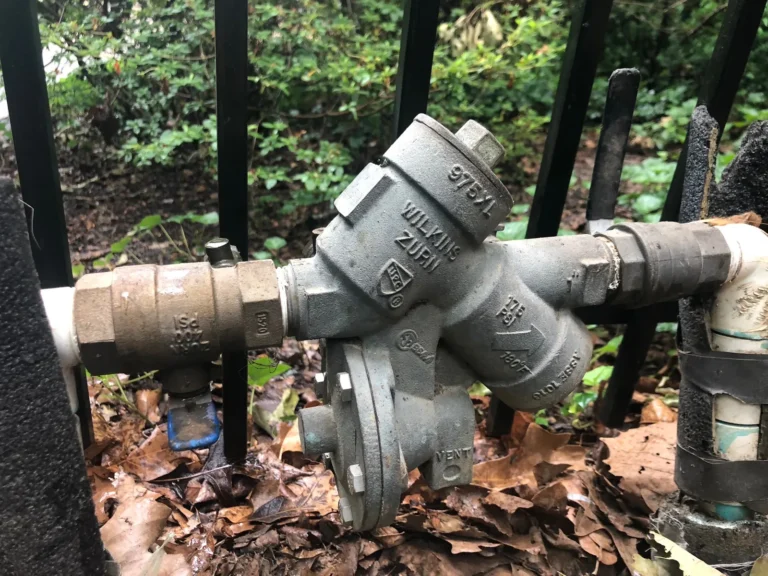
- Backflow preventer — a testable valve assembly that keeps irrigation water from ever flowing back into your home’s drinking water.
- Main line — the pressurized pipe that runs from the backflow preventer to the valves.
- Zone valves — electric valves that open one zone at a time. Each valve feeds one area of the yard.
- Lateral lines — the pipes from each valve out to the heads. They’re only pressurized when that zone runs.
- Heads and emitters — rotors, spray heads, or drip lines that actually put water on the ground.
- Controller — the “brain” that tells each valve when to open and for how long.
Designing a system means deciding how all of these fit your specific property.
Step 1: Survey the property and the water supply
Design starts with two measurements: the yard and the water.
The yard. We measure the lawn and beds, note slopes, shade, trees, driveways, walks, and anything underground. Sun-baked front lawns and shady backyard beds need very different amounts of water, and that shapes everything that follows.
The water supply. Two numbers set the limits of every system:
- Static pressure (PSI) — how hard the water pushes when nothing is running.
- Available flow (gallons per minute, GPM) — how much water your meter and service line can deliver while still keeping enough pressure at the heads.
Every head uses a certain amount of flow. If a zone has more heads than your supply can feed, pressure drops, spray distance shrinks, and you get dry spots between heads. Measuring pressure and flow up front is how we avoid that.
Step 2: Map your hydrozones
A hydrozone is an area where plants share the same water needs and growing conditions. Good design never puts sun-baked turf and a shaded azalea bed on the same valve — one would always be over-watered or the other under-watered.
Typical hydrozones in a Memphis-area yard:
- Full-sun turf — Bermuda and Zoysia lawns in open sun use the most water in summer.
- Shaded turf — fescue or turf under trees dries out more slowly.
- Shrub and flower beds — established shrubs need deep, infrequent watering at the roots.
- Planters, vegetable gardens, and new plantings — frequent, targeted water, ideal for drip.
- Trees — deep, slow soaking over the root zone.
Each hydrozone gets its own valve (or several), so it can run on its own schedule. This single step does more for plant health and water savings than any gadget.
Step 3: Pick the right emitter — rotor, spray, or drip
Each hydrozone gets the type of emitter that suits it.
| Rotor heads | Spray heads | Drip irrigation | |
|---|---|---|---|
| How it works | One or more rotating streams sweep an arc | Fixed fan covers the whole pattern at once | Low-flow emitters deliver water at the soil |
| Best for | Medium & large open lawns | Small lawns, strips, curved edges | Shrub beds, flower beds, planters, trees |
| Typical reach | Roughly 15–50 ft | Roughly 5–15 ft | Right at the root zone |
| Application rate | Slow, gentle — less runoff | Fast — runs short cycles | Very slow (gallons per hour) |
| Water efficiency | Good | Fair (more drift & runoff) | Excellent — little evaporation |
Step 4: Lay out heads head-to-head
The industry standard is head-to-head coverage: every head throws water all the way to the next head. That overlap is intentional. A sprinkler puts down the most water near itself and less at the edge of its throw, so overlapping patterns even out the gaps.
In practice that means quarter-circle heads in the corners, half-circle heads along edges, and full-circle heads in open areas, spaced so the patterns meet. We illustrate this on our sprinkler installation page with a coverage diagram. Spacing heads too far apart to save a few dollars is the most common reason for brown, crescent-shaped dry spots.
Step 5: Size the zones and valves
With heads placed, we add up the flow each head uses and group them into zones that stay within your available GPM. A zone that asks for more water than your supply delivers loses pressure and coverage.
Good zoning also considers:
- Same hydrozone, same head type on each valve.
- Pipe sizing that keeps water velocity and pressure loss in a safe range.
- Valve location in accessible boxes, grouped where practical, for easy service.
The result is a system where each zone runs at the right pressure and each area gets the water it needs — no more, no less.
Step 6: Protect your drinking water with backflow prevention
Every irrigation system connected to a public water supply needs a backflow preventer. Without one, a pressure drop in the city main could pull water from your sprinkler lines — along with fertilizer, pesticides, and soil — back into the drinking water system.
For Memphis Light, Gas and Water (MLGW) customers, the utility’s Cross Connection Control Program treats an underground irrigation system as a cross-connection that must be isolated. Testable assemblies must be tested by someone holding a valid State of Tennessee Certificate of Competency who is approved to test on MLGW’s system — including at irrigation startup — and reduced-pressure assemblies must be tested within every 12-month period. If you’re served by another utility (such as Collierville, Germantown, or Bartlett), their rules apply — we’ll confirm what yours requires.
Automatic Rain is certified to perform backflow testing, so we handle your annual backflow test and keep your system compliant year after year.
Step 7: Choose the controller
The controller decides when each zone runs and for how long. A basic timer runs the same schedule whether it’s a 98° July afternoon or the day after a thunderstorm.
A smart (Wi-Fi, weather-based) controller adjusts automatically. It uses local weather data — rainfall, temperature, humidity, wind, and sun — to estimate how much water your plants actually lost, then waters to replace it. It skips runs when rain is on the way and adds time during heat waves, and you can control it from your phone.
A smart controller paired with an efficient design can cut a home’s outdoor water use by up to 30%. In fact, the U.S. EPA notes that as much as half of the water we use outdoors is wasted to inefficient watering, and that simply swapping a standard clock timer for a WaterSense-labeled controller can save an average home up to 15,000 gallons a year — one of the easiest upgrades for an existing system. See our smart controller service.
Step 8: Plan for Memphis conditions
A design that works in Arizona or Florida won’t necessarily work here. Local details matter:
- Tight, silty and clay soils. Much of Shelby County has soil that absorbs water slowly. When water lands faster than the soil can take it in, it runs off. We program cycle-and-soak — several short runs with breaks in between — so water soaks in instead of running down the driveway.
- Hot, humid summers with pop-up storms. Water needs swing week to week. That’s where a weather-based controller earns its keep.
- Freezing winters. Systems need to be drained or blown out each fall and restarted each spring. We design with drain points and accessible valve boxes that make spring startup and winterization quick.
- Hardscape crossings. We plan sleeves under driveways and walks so pipe can pass beneath them — ideally before concrete is poured on new construction.
- Underground utilities. Tennessee law requires a call to Tennessee 811 before digging. Every Automatic Rain install starts with utility locates.
- Wet spots. If an area already stays wet, the design gives it less water, not more.
Signs a sprinkler system was poorly designed
If your current system has any of these, the problem is likely design, not just a broken part:
- Brown crescents or rings between heads (spacing too wide or low pressure)
- Soggy spots next to dry spots on the same zone (mixed head types)
- Water running into the street or down the driveway (application too fast for the soil)
- Heads spraying the house, fence, or sidewalk
- Shrub beds watered by lawn spray heads
- Weak spray on the last heads of a zone (too many heads for the flow)
Many of these can be fixed without starting over — re-zoning, re-nozzling, converting beds to drip, or adding a smart controller. Our sprinkler repair team can tell you what’s worth fixing.
How Automatic Rain designs your system
- Free quote visit. We walk the property with you, measure, check water pressure and flow, and talk through what you want watered.
- System layout. We plan hydrozones, head types and spacing, zones, backflow, and controller placement.
- Clear written quote. You see exactly what’s included.
- Professional installation. Utility locates, clean trenching, and a full coverage test of every zone.
- Startup and support. We program the controller, show you how it works, and handle backflow testing, seasonal service, and repairs down the road.
We serve homeowners and businesses across Memphis, East Memphis, Germantown, Collierville, Bartlett, Arlington, Eads, Piperton, and Rossville, Monday through Friday, 7 am to 5 pm.
Ready for a system designed for your yard?
Get a free quote from a local irrigation team that measures first and designs for how water actually behaves in Memphis soil.
Request a free quote Call 901-521-9112Frequently asked questions
How is a sprinkler system designed?
A designer measures the property and the water supply’s pressure and flow, groups plants by water need into hydrozones, chooses rotors, sprays, or drip for each area, spaces heads head-to-head, sizes zones to the available flow, adds a backflow preventer, and programs a controller.
What is a hydrozone in irrigation?
A hydrozone is an area of the landscape where plants have similar water needs and conditions, like full-sun lawn or shaded shrub beds. Each hydrozone is watered by its own zone so it can run on its own schedule.
What’s the difference between rotor and spray sprinkler heads?
Rotors sweep rotating streams across larger lawns (roughly 15–50 feet) and apply water slowly. Spray heads cover smaller areas (roughly 5–15 feet) with a fixed fan of water and apply it much faster. They shouldn’t share a zone.
When should I use drip irrigation instead of sprinklers?
Use drip for shrub beds, flower beds, planters, vegetable gardens, and trees. It puts water right at the roots with very little evaporation or overspray, and keeps water off foliage, walls, and walkways.
Why are my sprinklers leaving dry spots?
The most common causes are heads spaced too far apart, low pressure from too many heads on one zone, mixed rotors and sprays on the same zone, and clogged or misaligned nozzles.
Do I need a backflow preventer for my sprinkler system in Memphis?
Yes. An irrigation system connected to the public water supply needs backflow prevention. MLGW requires testable assemblies to be tested by a state-certified tester approved to test on its system. Other area utilities have their own rules.
Are smart sprinkler controllers worth it?
For most homes, yes. A weather-based smart controller adjusts watering to rain and temperature automatically, and paired with an efficient design it can cut outdoor water use by up to 30%. The EPA notes a WaterSense-labeled controller can save an average home up to 15,000 gallons a year compared with a standard clock timer.
Can an existing sprinkler system be redesigned?
Often, yes. Many problems can be fixed by re-zoning, changing nozzles, converting beds to drip, adding heads for coverage, or upgrading to a smart controller — without replacing the whole system.